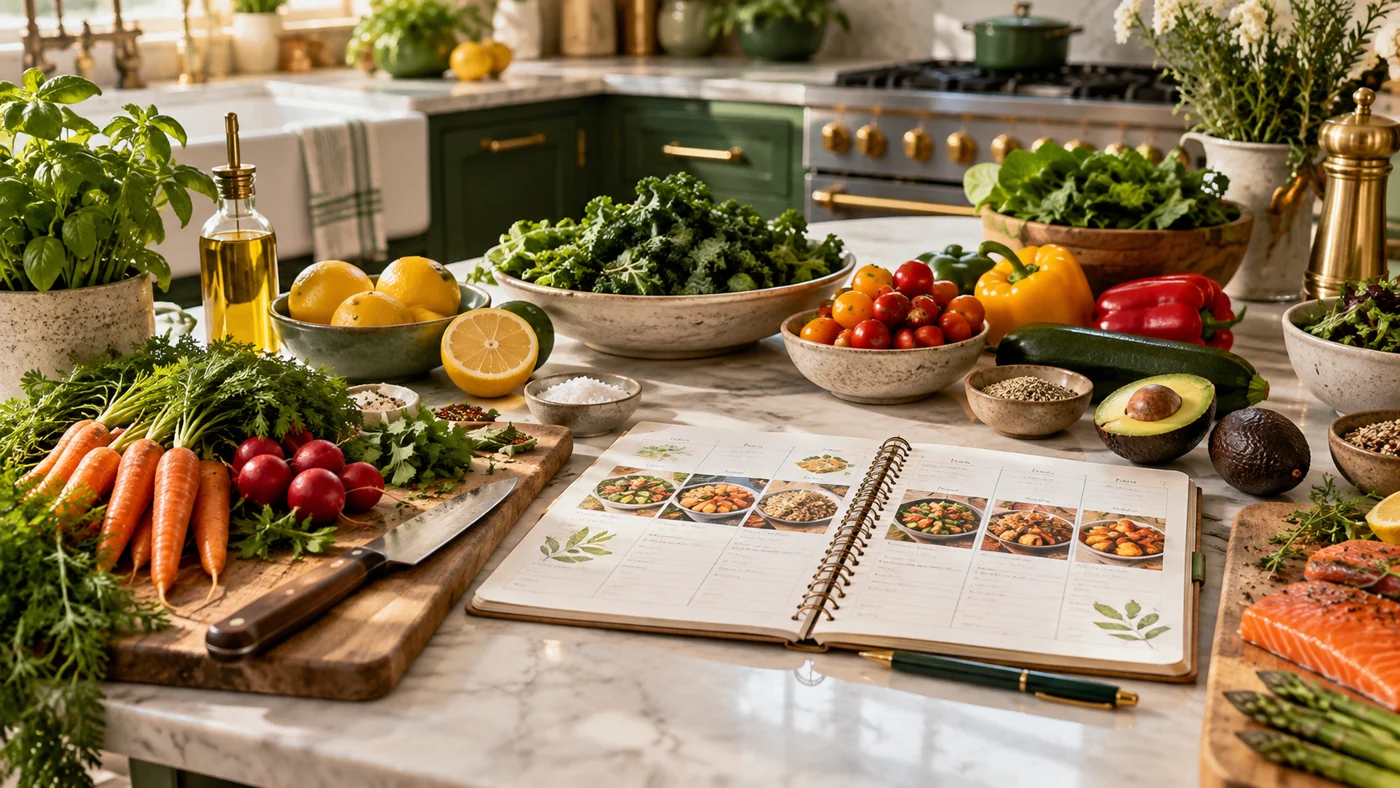
A weekly meal plan reduces repeated decisions and helps turn the food you already have into a practical shopping list. Start with your schedule, available storage and preferences. The plan should be easy to change when a day becomes busy.
A practical workflow
- Check the fridge, freezer and cupboards before choosing meals. Note what should be used first and which evenings have limited preparation time.
- Choose meals with some overlapping ingredients, then make a shopping list by category. Account for the number of people, existing supplies and planned leftovers.
- Assign preparation tasks to realistic days and include one simple backup meal. Review what was used, wasted or inconvenient before planning the following week.
Worked example
If two meals use carrots and rice, buy for the combined quantities rather than two separate lists. A busy evening can use a meal prepared earlier, provided storage and reheating follow applicable food-safety guidance. Keep the plan flexible instead of buying ingredients for seven elaborate recipes.
What to check before sharing
Do not turn a general planner into a medical diet recommendation. Check allergies, household needs and relevant professional guidance where a health condition affects food choices.
Should I plan every meal?
Plan the decisions that create the most friction for your household. Some people need only dinners and a shopping list; others benefit from lunches as well. Leave room for changes.