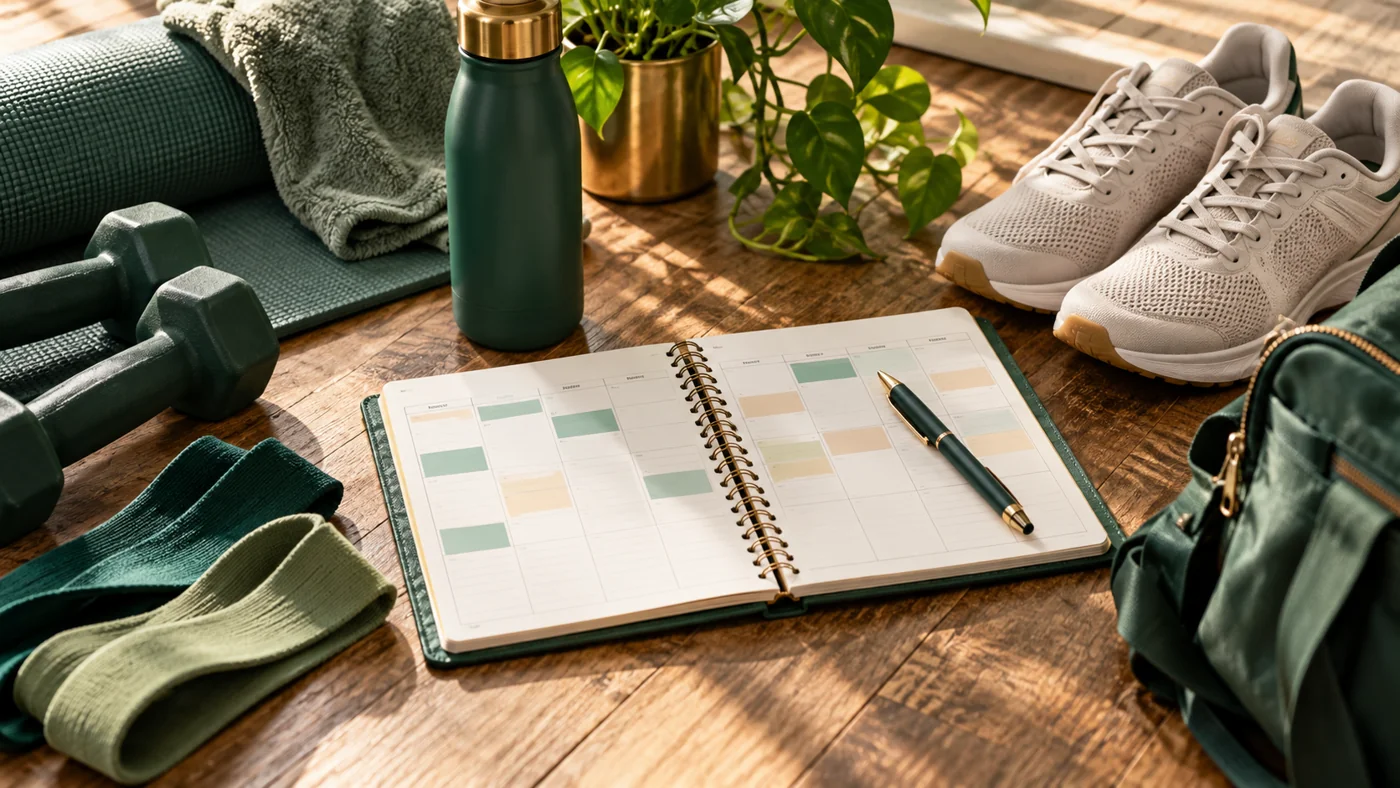
A repeatable fitness plan fits your available time and current ability. A manageable routine with a review point is more useful than an ambitious schedule you cannot sustain. Use a planner to organise activity, not to diagnose a condition or prescribe treatment.
A practical workflow
- Record which days and locations are realistic, what equipment you have and what you already do. Choose an achievable starting schedule and include recovery time.
- Write the activity, approximate duration and a simpler alternative for busy days. Keep a short note of how each session felt rather than judging success only by intensity.
- Review consistency and comfort before increasing the workload. Adjust the plan when it does not fit, and seek qualified guidance for injuries, symptoms or health concerns.
Worked example
A beginner's organisational plan might reserve two short activity slots and one flexible weekend slot, with a shorter alternative when time is limited. The appropriate activity and effort vary by person; the template should record the plan you have chosen with suitable guidance, not impose one on you.
What to check before sharing
Avoid promises of a specific weight change or result. Stop and seek appropriate help for concerning symptoms rather than trying to complete a checkbox at all costs.
What if I miss a session?
Review why it happened and resume an appropriate routine. Do not automatically double the next session to compensate. A smaller, workable plan is often easier to maintain.