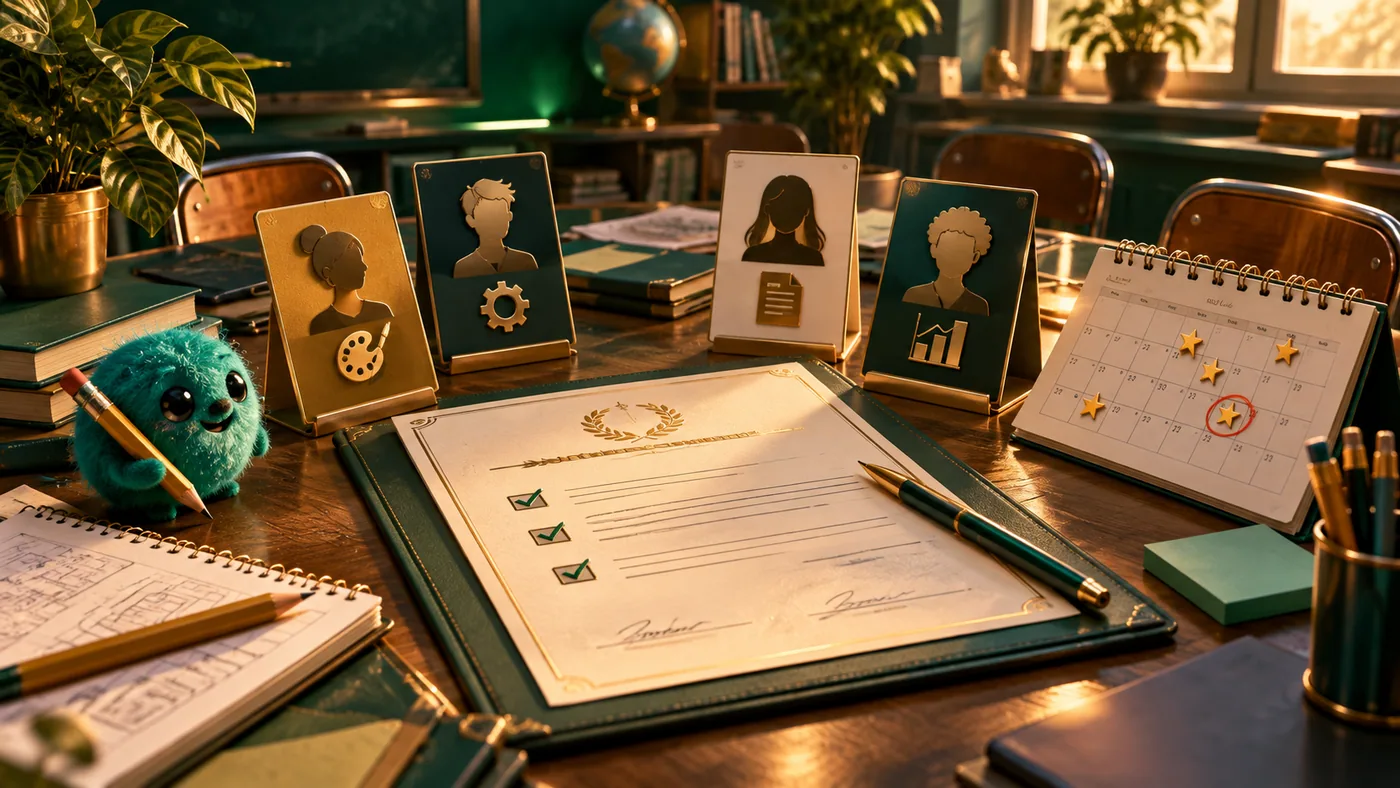
A school group project agreement clarifies how the team will work before a deadline or disagreement creates pressure. It should make responsibilities fair and visible while allowing tasks to be reassigned when circumstances change.
A practical workflow
- Break the project into research, drafting, checking, design and presentation tasks. Give each task an owner and agree how shared work will be credited.
- Set dates for a rough draft and review before the final deadline. Use one shared location for the current version and agree how comments will be resolved.
- Decide how to report a blocker or missed commitment. Start with a respectful check-in, record the new plan and involve the teacher according to the assignment's rules.
Worked example
A four-person group can assign one research section to each member, then rotate checking responsibilities so everyone reviews someone else's work. A checkpoint might ask each person to show their draft and one unresolved source question. The final assembly should not silently become one student's entire task.
What to check before sharing
Do not use a contract to invent grading penalties or override the teacher's assessment policy. Keep contribution notes factual and avoid public accusations.
A group project contract turns vague expectations into a plan students can revise together. It should support accountability without pretending every week will go perfectly.
Agree on roles
List the research, drafting, design, presentation and editing tasks. Assign an owner for each task and a backup who knows where the work is stored. Avoid giving one student every visible or technical task.
Use checkpoints
Set a short planning meeting, a rough draft date and a final review. At each checkpoint, record what is complete, what is blocked and what needs reallocation. Use one shared space for the current version.
Handle missed work
Define how the team will contact someone who is late, how much time they have to respond and when the teacher should be involved. Keep notes about contributions and decisions. A fair contract describes the process before conflict occurs.
What if someone cannot do their task?
Ask what is blocking them, agree a revised contribution and record the change. Escalate unresolved problems through the teacher's process rather than waiting until submission day.