Define the work before the tool
Choose one routine task, such as drafting an internal meeting follow-up from approved notes. Describe the intended output, the recipient and the checks required. Give the starter an approved example and explain what makes it usable. Avoid a vague target such as “become good at AI”.
Microsoft’s 2026 Work Trend Index highlights the role of organisational support and work design in AI use. Your onboarding plan should translate that broad issue into clear responsibilities for the particular job.
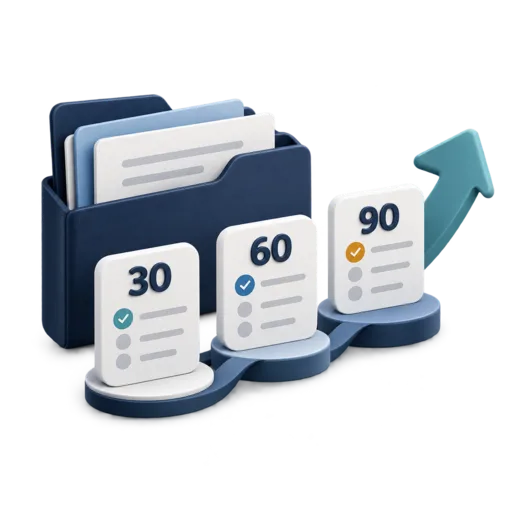
Days 1–30: learn the boundaries and practise safely
Confirm the approved tools, account access and data-handling rules with the responsible team. Explain when the starter must use a different process or ask for help. Use fictional or approved training material for practice.
- Starter: drafts one example and identifies statements that need verification.
- Buddy: demonstrates how to check the draft against the source.
- Manager: confirms the output standard and review route.
- Checkpoint: the starter can explain what can be shared and what requires approval.
Record the actual policy or source location. A link to a general AI guide is not a substitute for the organisation’s own rules.
Days 31–60: complete a supervised workflow
Move from isolated prompts to the whole task: receive the request, find the permitted source material, draft, verify, review and deliver. Keep the reviewer responsible for accepting the final result. The starter should be able to identify uncertainty rather than conceal it in polished wording.
| Work step | Evidence to review | Owner |
|---|---|---|
| Choose inputs | Approved source and access confirmed | Starter with buddy |
| Draft | Output fits the requested purpose | Starter |
| Verify | Facts and commitments checked against sources | Starter |
| Approve | Named reviewer accepts the final version | Designated reviewer |
Track revisions and recurring errors. A faster draft is not automatically a faster completed task if verification and rework take longer.
Days 61–90: demonstrate a repeatable standard
Ask the starter to complete the agreed workflow with the appropriate review, explain any exceptions and suggest one improvement. Measure output quality, required corrections and completion time using comparable tasks. Treat the evidence as a coaching input, not a universal productivity score.
A practical checkpoint might be: “Produces a source-checked follow-up with accurate decisions, confirmed owners and clear unresolved questions, using the approved process.” Adjust expectations to role, experience, access and the work actually available during onboarding.
Keep ownership visible after day 90
Name who maintains the example, who updates the rules and who handles new questions. Revisit the plan when tools or procedures change. Keep sensitive employment information in the appropriate internal system rather than a broadly shared onboarding document.
Use the onboarding plan tool to record milestones, support contacts and review dates. The general onboarding guide covers the wider first ninety days. Pair it with the meeting action review checklist for a concrete practice task.
Build your onboarding plan using your own information. Review the result before exporting or sharing.
Build your onboarding plan →