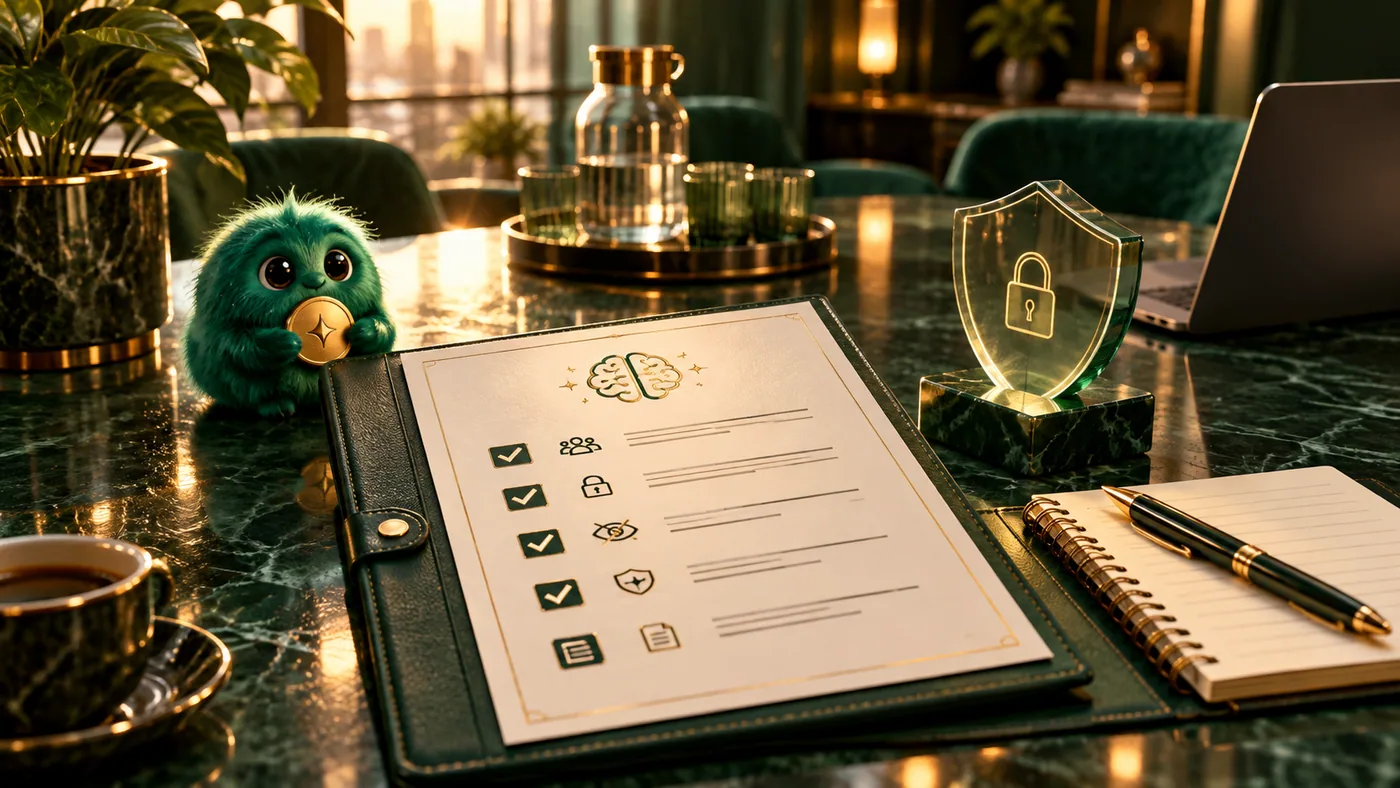
A meeting-notes policy should be clear enough for a host to follow before the meeting starts. It also needs an alternative when automated recording or transcription is inappropriate. The policy is a practical workflow, not a substitute for the privacy or employment rules that apply to your organisation.
A practical workflow
- Name the approved system and specify which meeting types may use it. Check the vendor's retention, access and data-use settings with the responsible team.
- Tell attendees what will be captured, who can access it and how to raise an objection. Follow the consent or other requirements applicable to your location and context.
- Assign a human reviewer and a retention owner. Correct the summary before sharing, limit distribution and record when source recordings or transcripts should be removed.
Worked example
A one-page policy can state: 'The host announces transcription before it begins. The meeting owner reviews decisions and actions before distribution. Notes go only to the project team. Restricted matters use approved manual minutes.' Add the organisation's actual retention period and approval contact rather than adopting an arbitrary number.
What to check before sharing
Do not assume a familiar AI tool is approved for every confidential discussion. Avoid entering credentials, identity numbers or sensitive personal records into a general recap generator.
AI meeting notes can save time, but a useful policy must explain what happens to the recording and transcript. Start by naming the approved tool and the meetings where it may be used. Require the host to tell attendees before recording or transcription begins.
Include four decisions
- Consent: explain how attendees can object or request a human-only meeting.
- Access: limit the notes to people who need them for the work.
- Review: assign an owner to correct names, decisions and action items.
- Deletion: define how long recordings and transcripts remain available.
Keep sensitive information out of the tool when a human summary is enough. Add a short footer to each approved note: source, date, reviewer and retention date. Review the policy after a month using actual questions from the team. The aim is dependable records, not automatic transcription of every conversation.
Can we use AI notes for every meeting?
Only where your approved process and applicable requirements allow it. Provide a human-only alternative and verify the output; automatic notes can misstate decisions.