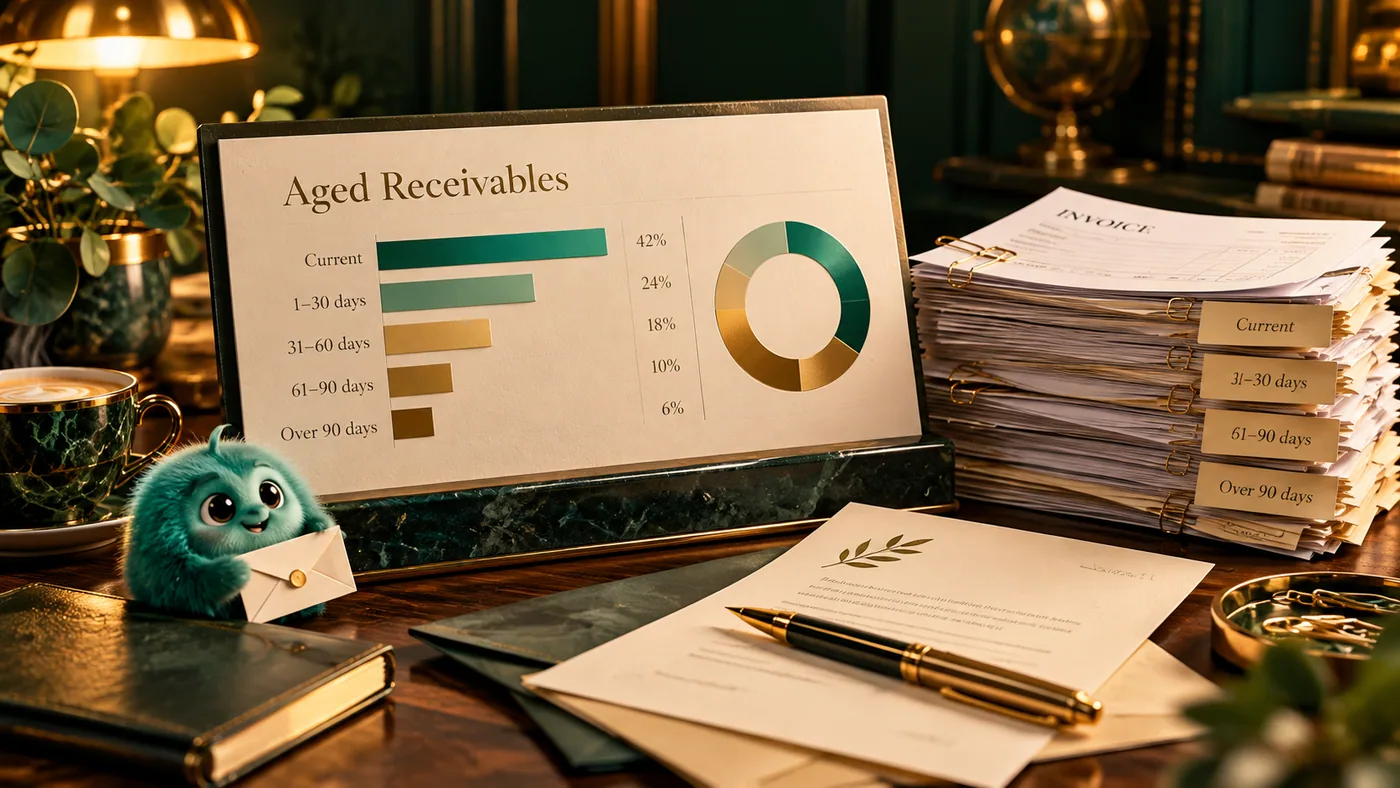
An aged receivables report groups unpaid customer invoices so you can decide which follow-up deserves attention. It is most useful when the underlying invoice and payment records are reconciled before a reminder is sent.
A practical workflow
- Choose an as-of date and record each invoice's reference, due date, amount, payments and remaining balance. State whether your buckets measure days overdue or invoice age.
- Group balances into current, 1–30, 31–60, 61–90 and over 90 days overdue, or the intervals your business uses. Review unusually large balances and missing due dates.
- Assign each account a next action: confirm delivery, resolve a query, resend the invoice or follow up on an agreed payment date. Record an owner and the next review date.
Worked example
On an illustrative report dated 30 June, an invoice due 20 June is 10 days overdue and belongs in the 1–30-day bucket. If the customer has paid part of it, chase only the reconciled outstanding balance. A disputed invoice should carry a dispute note, not simply a more forceful reminder.
What to check before sharing
Do not infer that every old invoice reflects a unwilling customer. Check allocation errors, missing purchase-order references and unresolved delivery issues first.
How often should I review receivables?
Weekly is a practical starting point for many small teams. Review high-value or time-sensitive accounts more frequently, and keep reminders consistent with agreed terms and applicable rules.